

Ever wondered how a simple scale keeps prices honest? Handbook 44 lays out the rules for checking every watt and weight in our markets. This guide from the Office of Weights and Measures helps keep things fair, from your local corner store to large factories. The guidelines are clear and are updated regularly so every transaction based on weight is just. In this article, we explain how Handbook 44 acts as the backbone of fair trade by providing everyone with a reliable set of standards.
Handbook 44 Overview: Purpose, Scope, and Official Access
Handbook 44 is the go-to guide for checking the accuracy of scales, meters, and other measuring tools across the nation. Officially named "Specifications, Tolerances, and Other Technical Requirements for Weighing and Measuring Devices," the manual is published by the Office of Weights and Measures at NIST. It’s a must-have reference for anyone who works with weights and measures, making sure commerce stays fair.
This guide sets the nation's standard for measurement checks. From small neighborhood stores to big manufacturing plants, users rely on Handbook 44 to confirm that their devices work properly. Its clear rules help make sure every sale based on measurement is exact.
You can get Handbook 44 as a printed book or download it as a PDF. The official version is available directly from NIST and is updated regularly with the latest practices. Whether you need a copy to study at your desk or one you can pull up on your phone while on the go, Handbook 44 is the trusted manual that keeps inspections and device calibrations on track.
Historical Evolution and Revision of Handbook 44

Handbook 44 made its debut in 1949 and has been a trusted guide for checking measuring devices ever since. It set the standard for accurate tools used by many industries.
- Debut in 1949
- Began regular NCWM reviews to keep it updated
- Early major changes improved measurement precision
Today, NCWM committees play a big role in keeping the handbook relevant. Each year, local experts meet to discuss new industry practices and test ideas. They make sure any updates work well in the real world. This careful review process means that every change helps with clear guidelines, so professionals can rely on accurate measurements and fair transactions on every block.
Handbook 44 Technical Specifications and Tolerance Tables
Handbook 44 lays out clear rules for the everyday devices we rely on. It spells out exact measurement limits for tools like weighing scales, liquid meters, dimensional gauges and EVSE meters. The guide follows NIST guidelines to make sure every device gives accurate readings. This makes it easy for inspectors to check that things are in line with the rules. In practice, professionals use these charts to compare on-site measurements with set limits, keeping things fair for both businesses and customers.
Tolerance charts in Handbook 44 are a practical tool for inspectors and technicians. They break down the allowed error for different types of equipment in a simple format. Any deviation from the standard can be quickly spotted and corrected. For example, there are separate charts for devices that measure weight, volume or size. This clear layout helps professionals carry out routine checks fast and ensures that devices stay within the correct limits.
| Device Category | Tolerance Type | Chart Reference |
|---|---|---|
| Weighing scale | ±0.05% | Table A |
| Liquid meter | ±1% | Table B |
| Dimensional gauge | ±0.02 mm | Table C |
| EVSE meter | ±2% | Table D |
Implementing Handbook 44 Compliance Standards
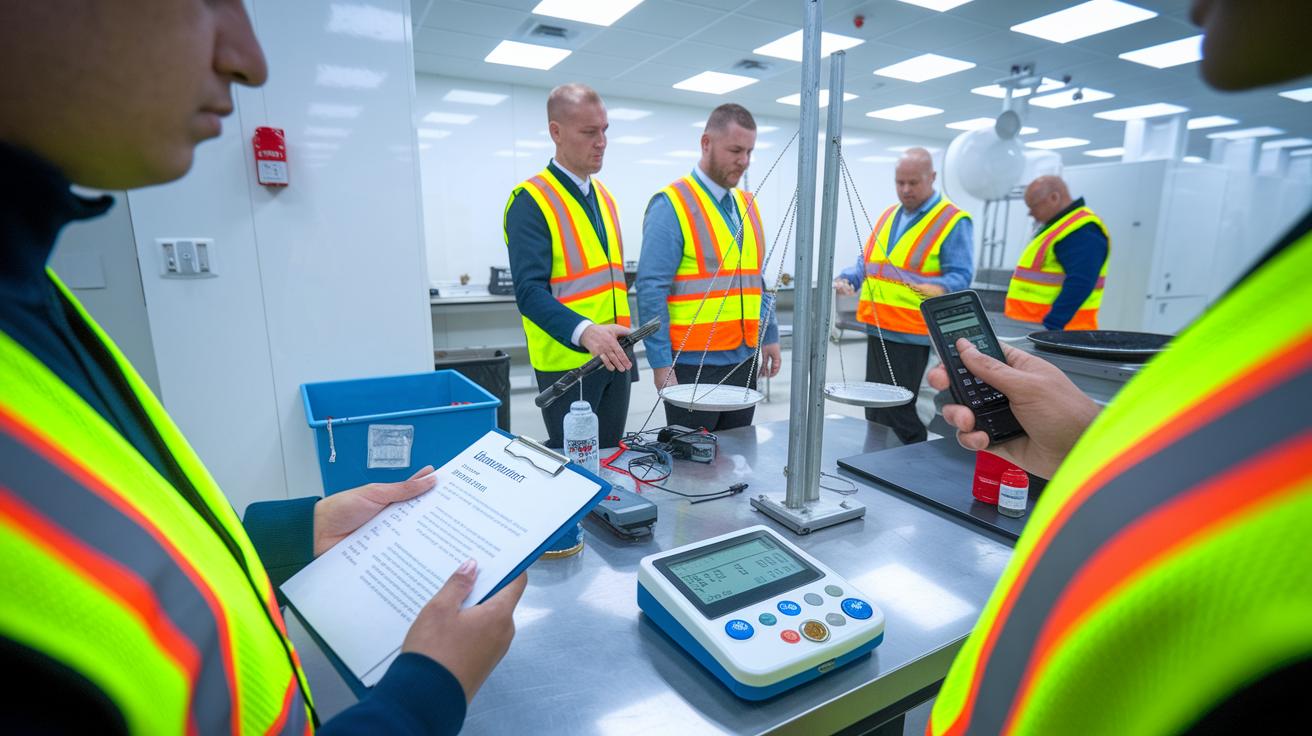
Local inspectors stick to clear steps to check that measurement devices follow federal and state rules. When they visit a site, technicians run tests that compare each device’s reading with the tight limits in Handbook 44. They check scales, meters, and gauges using accurate tools, ensuring any error is caught right away. These actions are backed by both federal laws and state regulations, giving inspectors the power to enforce safe and fair transactions.
If a device fails to meet the standards, local guidelines give field workers the right to stop a transaction immediately. They notify the responsible party and document the issue with a formal notice of non-compliance. Detailed records are kept to support any needed legal action, and faulty equipment is removed from use until it’s repaired. This process helps keep trust among local businesses and customers.
For instance, if a water meter shows readings beyond the allowed range, it is taken out of service until it is fixed. This quick step prevents billing mistakes and makes sure the device works right before it’s used again.
Comparing Handbook 44 Editions and Recent Updates
In 2022, Handbook 44 got an update that made checking weights much clearer. The changes help inspectors and users confirm that devices like scales work right and measure correctly.
In 2023, NCWM added new rules for EV charging station measurements in section 3.40. With more electric vehicles on the road and charging stations popping up around the city, these standards keep readings accurate for fair billing and safe use.
Every year, local experts and industry pros meet to review the handbook. They swap ideas and test updates before any changes go into effect. This regular review helps Handbook 44 keep pace with new technology and market needs, making it a trusted guide for weights and measures in our community.
Handbook 44 Download, Training, and Study Resources

The official Handbook 44 is available for free as a PDF from the NIST Office of Weights and Measures. This guide is a must-have for professionals who need clear measurement rules when they work on the job. You can also find many study resources to help you prepare for your certification or to brush up on your skills.
Self-study modules and practice tests explain each section in plain language. Official training guides are also available and match the NCWM exam rules, giving inspectors and technicians a step-by-step way to learn measurement and calibration. These tools mix practical instructions with real-world examples that fit right into your daily work. They are key for planning on-the-job training and exam prep, making sure current standards are easy to reach for both new learners and seasoned pros.
- Get the Handbook 44 free PDF from NIST’s Office of Weights and Measures website.
- Use a self-study guide full of real local examples.
- Check your skills with practice tests that recap the main points.
- Follow the official training manuals designed for NCWM exam prep.
- Rely on exam tips and checklists for quick, last-minute reviews.
These resources are updated each year. They are a must for any professional who wants to keep up with the ever-changing rules of weights and measures in our community.
Industry Applications of Handbook 44 Standards
Section 3.40 of Handbook 44 lays out simple rules for checking and maintaining electric vehicle charging stations. Local technicians use these guidelines to run quick tests on EVSE meters. This makes sure every meter gives accurate readings so billing stays fair and operations remain safe.
They often rely on trusted tools like the Fluke FEV150 EV Station Analyzer and the Fluke PRV240 Proving Unit. These tools help them quickly spot any issues that fall outside the handbook's set limits.
The handbook also provides clear steps for checking scales, meters, and gauges across different industries. Local inspectors use these rules on-site to ensure devices work within safe limits. This regular checking builds trust among businesses and the community.
Final Words
In the action, we've broken down what handbook 44 covers, from its technical requirements and tolerance charts to compliance standards and study resources. We walked you through its long history, recent updates, and real-world industry use. Each section showed how this manual guides professionals to verify device accuracy and stay up to date. With clear steps for accessing and learning from handbook 44, you now have practical points to keep your work safe and on track. Stay informed and keep your community moving forward.
FAQ
What is NIST Handbook 44?
The NIST Handbook 44 defines specifications, tolerances, and testing standards for weighing and measuring devices used by industry inspectors to verify equipment accuracy.
Where can I download the Handbook 44 PDF for free?
The Handbook 44 PDF is available free from the NIST Office of Weights and Measures website, offering the official and current guidelines for measurement standards.
Where can I find the tolerance tables such as Table 4 and Table 6 in Handbook 44?
The handbook contains detailed tolerance tables like Table 4 and Table 6, which list specific measurement tolerances to help inspectors ensure devices meet required accuracy.
How do maintenance tolerance and acceptance tolerance differ?
Maintenance tolerance refers to acceptable limits during regular recalibration, while acceptance tolerance sets the performance standard required when a new device is first approved.
What are NIST traceable weight standards in Handbook 44?
NIST traceable weight standards are certified weights linked to national measurements, ensuring that devices measured against these standards achieve the precision outlined in Handbook 44.
What history does Handbook 44 have and how is it maintained?
First published in 1949, Handbook 44 is updated annually by the NCWM, reflecting changes in technology and industry practices while maintaining strict measurement accuracy.
Are there training resources and test questions available for Handbook 44?
Yes, a range of study guides, practice tests, and training manuals are available to help professionals prepare for certification and better understand the standards in Handbook 44.