

Ever wonder if Long Island is part of New York City? A lot of folks think that the whole island follows NYC rules. In reality, only Brooklyn and Queens are in the city, while Nassau and Suffolk counties call their own shots.
Our article digs into the history that set these borders and explains why it matters for your everyday life. Stay tuned for a straightforward look at why this split still plays a role in our neighborhood today.
Long Island and NYC: Defining the Official Borders
New York City has five boroughs: Manhattan, the Bronx, Brooklyn, Queens, and Staten Island. But here’s the catch: only Brooklyn (Kings County) and Queens (Queens County) sit on the western side of Long Island. When folks say "Long Island," most locals actually mean Nassau and Suffolk counties, not the NYC boroughs.
Nassau and Suffolk cover the center and eastern end of Long Island. They run their own show, handling things like police, schools, and public works, separate from New York City.
| County | Affiliation |
|---|---|
| Kings County (Brooklyn) | Part of NYC |
| Queens County (Queens) | Part of NYC |
| Nassau County | Not part of NYC |
| Suffolk County | Not part of NYC |
So, only about half of Long Island falls under NYC’s rules. We’ll explore the history behind these borders and what it means for you in the next sections.
Historical Boundaries: How Long Island Partially Joined NYC
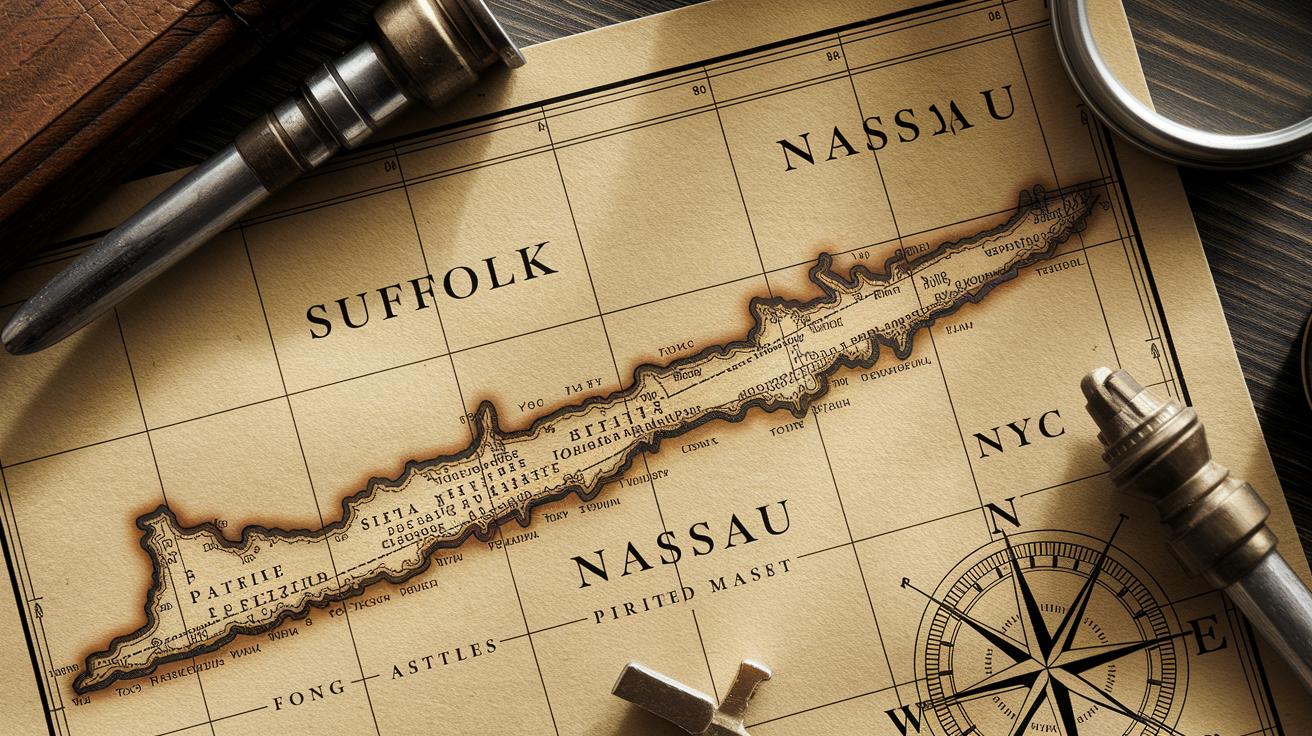
Colonial rule set the stage for Long Island’s split identity. In 1683, Suffolk County was formed under the New York Province, marking one of the first organized parts of the island, well before New York City even existed. As settlers spread out, things changed fast. In 1898, Brooklyn and western Queens came together to form New York City, shifting the heart of urban power on our block. Then, in 1899, towns in eastern Queens broke away to create Nassau County, carving out their own space away from NYC. By the early 1900s, final tweaks to the borders between Nassau, Suffolk, and New York City set the lines we live with today.
| Year | Event |
|---|---|
| 1683 | Suffolk County formed under the New York Province |
| 1898 | Brooklyn and western Queens merge to create New York City |
| 1899 | Eastern Queens towns break away to form Nassau County |
| Early 1900s | Final border adjustments solidify current boundaries |
These defining moments show how a mix of colonial setups and city-building changed our region. Even today, while parts of Long Island are part of New York City, Nassau and Suffolk still run their own show based on centuries of evolving borders.
Mapping the Divide: NYC Borough Lines on Long Island
Kings and Queens still make up the city area of Long Island, but things are changing along the border.
Right along the Queens-Nassau line, suburbs are welcoming many new residents. Younger families and professionals are moving into Nassau, sparking investments and driving up home prices. Over in Queens, you'll see a mix of busy city life and quieter streets that show the community changing.
Visual note: Add a map of Long Island that shows the NYC boroughs on the west and the county lines on the east.
Back in 2010, Nassau County had 1,339,532 residents, while Suffolk County had 1,493,350. Recent trends point to growing diversity and economic shifts that are reshaping local neighborhoods.
Governance Differences: NYC Borough Administration Versus Long Island Counties

New York City's government is run from one central hub. The mayor, along with the city council and borough presidents for Brooklyn and Queens, directs how the five boroughs operate. This means that decisions on things like education and roads come straight from City Hall. Before any neighborhood project kicks off, a decision made in City Hall can shape the entire community's access to services. Borough presidents act as a bridge between neighborhood needs and the central government so that local voices aren't lost.
Nassau and Suffolk counties work in their own way. In these areas, local voters choose leaders who manage public works, law enforcement, and schools. The county executive and the county legislature team up to address local issues that matter to residents. In Nassau, for example, leaders fine-tune community programs to meet the needs of growing residential areas, while Suffolk officials focus on keeping open spaces and boosting local businesses.
The difference in public services is clear. New Yorkers rely on a unified police force like the NYPD, common school districts, and centralized public works. In Nassau and Suffolk, residents get services from their own police forces, independent school systems, and projects that directly affect their day-to-day lives.
Common Misunderstandings: Why Many Mistake Long Island as NYC
Every morning, countless New Yorkers catch the LIRR and subways heading to Manhattan. With so many trains connecting Long Island and the city, it’s easy to think that Long Island is part of New York City. For instance, a rider might glance at a map and assume that if their train runs from Long Island to Manhattan, the island must belong to the city.
The mix-up grows when county names match borough names. Take Queens County as an example. It’s both the county and a borough in New York City. This overlap makes maps tricky to read, as the lines seem to blur. A sign displaying "Queens County" might give the false impression of a larger area than it really is. Even transit guides add to the confusion by using well-known names without pointing out the differences between boroughs and separate counties.
Meanwhile, the local accents, street layouts, and suburban feel in Nassau and Suffolk show clearly that these areas have a different vibe than the busy streets of New York City.
Final Words
In the action, the post breaks down Long Island's split between city and county. It shows that Brooklyn and Queens form the NYC core while Nassau and Suffolk stay apart. The piece covers key historical decisions and local governance, making it easy to see where long island part of nyc fits in today's picture. The discussion clears up common mix-ups and gives you a solid, local snapshot. It leaves you ready to tackle daily neighborhood life with fresh perspective and useful insights.
FAQ
Q: Is Long Island part of NYC, or does it lie outside the city limits?
A: The answer is that only Brooklyn and Queens—the western end of Long Island—are part of NYC. Nassau and Suffolk counties, which many refer to as Long Island, are outside NYC jurisdiction.
Q: Is Long Island a city or a state?
A: The answer is that Long Island is not a city or a state. It is an island comprising several counties, with only two boroughs—Brooklyn and Queens—forming parts of NYC.
Q: Is Long Island part of Queens and under the NYC mayor’s control?
A: The answer is that while Queens is a NYC borough and under the mayor’s jurisdiction, the term Long Island often refers to Nassau and Suffolk counties, which do not fall under NYC governance.
Q: Is Long Island a borough?
A: The answer is that Long Island is not a single borough. It includes parts of NYC (Brooklyn and Queens) and the separate Nassau and Suffolk counties that function independently from NYC’s borough system.
Q: Does Long Island City count as part of NYC?
A: The answer is that Long Island City is indeed part of NYC. It is a neighborhood in Queens, making it fully governed by NYC’s administrative structure.
Q: Why is Nassau County not part of NYC?
A: The answer is that Nassau County split from Queens in 1899, establishing its own county government. This decision set distinct administrative boundaries separating it from NYC jurisdiction.
Q: When did parts of Long Island become part of New York City?
A: The answer is that Brooklyn and western Queens consolidated into NYC in 1898. This historic move integrated those areas into the city, while the eastern portions remained as separate counties.